
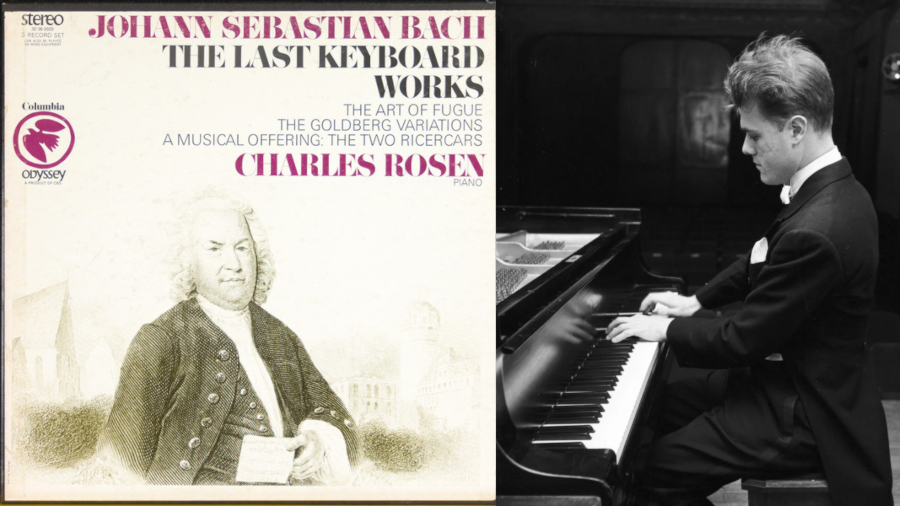
A three-record boxed set is a time commitment, so I don't often listen to this collection of Charles Rosen's late Bach. That's too bad, since there is a lot to recommend it, in fact, this record is a favourite of mine – something that I remember every time I listen to it.
Rosen had two recording career peaks, in the late-60s, when he recorded for big labels like Columbia (and Odyssey) and in the late-70s, when he recorded for smaller labels like Symphonica and Nonesuch just before the music industry was turned upside-down by digital recording and CDs.*
I'm always surprised when I come back to Rosen. I like his style; his playing is precise and clear, but not quite as deconstructed as Gould, and his Russian piano training shows in his willingness to pedal, but not to the extent of Richter. And I really appreciate his Art of Fugue, from his own performance transcription from the urtext (which is in open score).
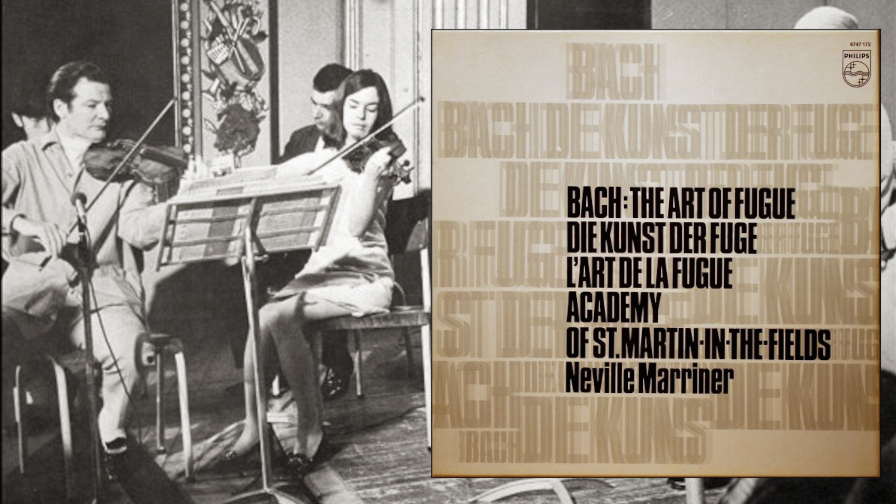
The Art of Fugue is a major touchstone for me, and I have it in a vast number of formats, from vinyl records, to CDs, and a pocket score. I will be writing more about this greatest of all explorations of contrapuntal music, since it really defines my world, but one of the things that this recording reveals so well to me is how different performers, in different arrangements, have found such different voices in these notes. Bach has such depth in his music that it can reveal infinite possibilities. It turns out that this is one of my favourite keyboard performances of the Art of Fugue; it is less analytical (warmer? more romantic?) than Pierre-Laurent Aimard, and much less polite than Angela Hewitt. (I mean... I love them both, but they have different souls.)
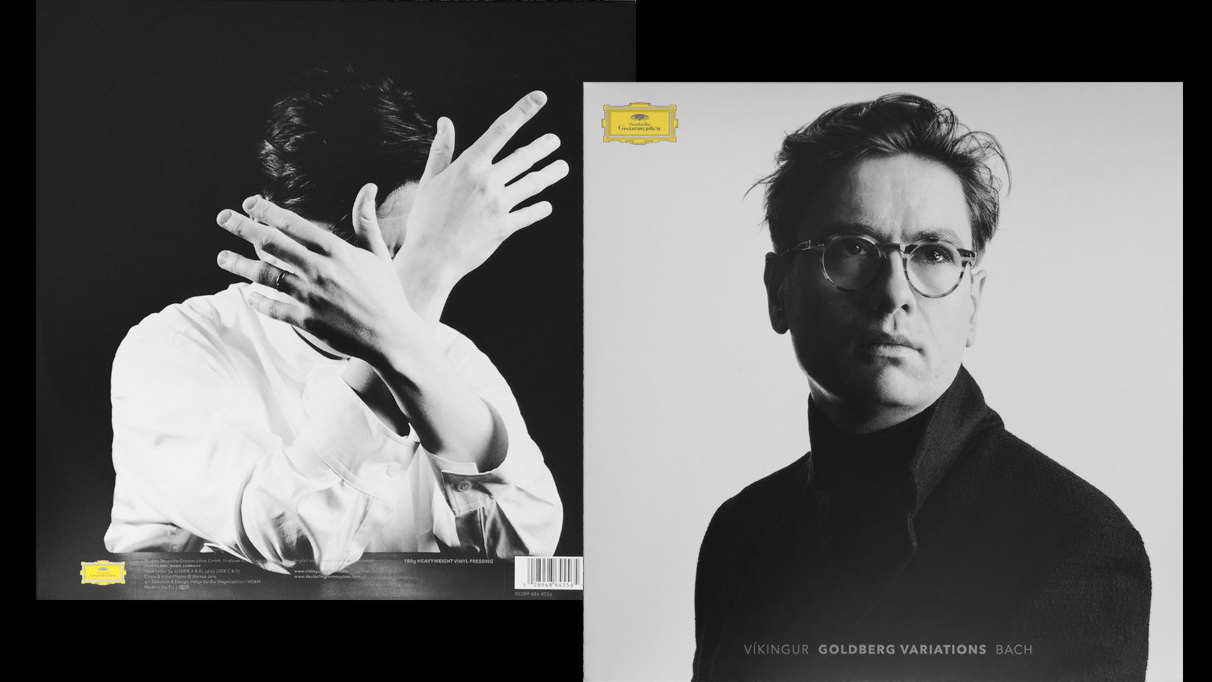
Rosen also performs two Ricercars from The Musical Offering and The Godberg Variations. I am surprised that this latter performance is not better-known, although it was reissued on CD a few years ago as part of Sony Music’s “Essential Classics” series (Sony Classical – SBK 48 173). It is also available in streaming, so there really is no reason not to give it a listen. Hearing such a familiar work as The Goldberg Variations from many different perspectives illuminates Bach’s genius, while also reminding us that the human element of performance is essential a part of music as the notes in the score.
* I know that Nonesuch was not, technically, a small label, but rather an imprint of a sorta-big label, but by the late-70s, with Tracy Sterne increasingly embattled, it really was a kinda small label. Bear with me.

0 Comments